
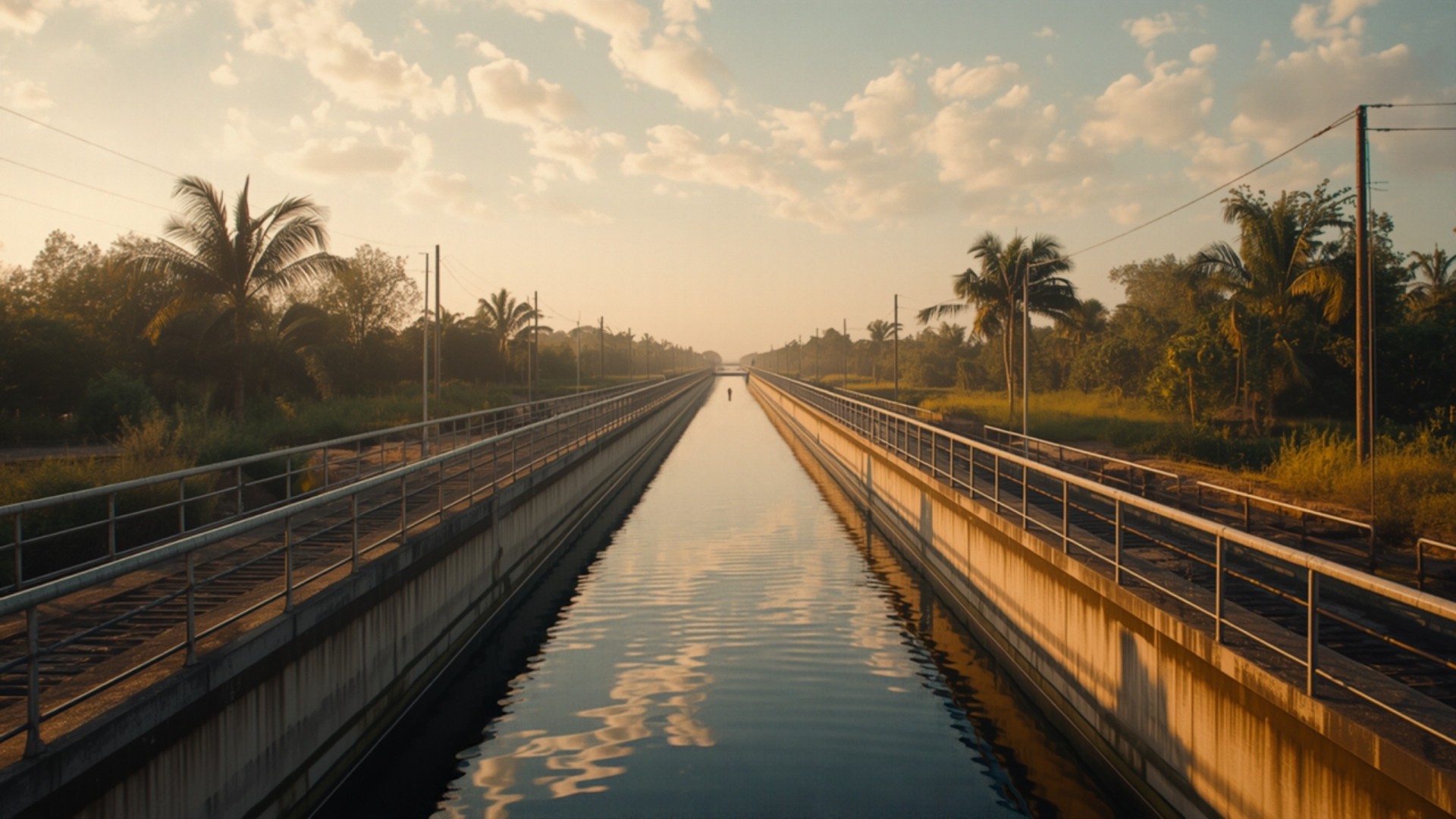
Brownsville’s City Commission took a concrete step on water infrastructure on September 22, 2026—approving projects that local reporting says could add about 18 million gallons per day of capacity for the region. For buyers and relocators, that headline is not a utility-bill forecast or a promise that any one subdivision will “have water forever.” It is a public capacity story you can track while you shop streets, read disclosures, and decide how long you plan to stay.
This guide orients you to what was approved, how it ties to the city’s August agreement with SpaceX, and what is useful to watch next. It is not a rate study and it invents no home prices.
What the Commission approved on Sept. 22
According to [BTX Today’s September 23 report](https://btxtoday.com/brownsville-approves-water-projects-to-add-18-million-gallons-daily/), commissioners approved Resolution No. 2026-127. That resolution identifies projects benefiting the Brownsville Public Utilities Board (BPUB) and the Southmost Regional Water Authority as qualifying projects under the city’s August 29 agreement with SpaceX. It also ratifies an escrow arrangement involving the city, PlainsCapital Bank, and SpaceX.
The same coverage breaks the capacity narrative into two pieces:
- BPUB potable reuse / wastewater reclamation — about 8 million gallons per day of expected capacity.
- Southmost Regional Water Authority facility expansion — about 10 million gallons per day of expected capacity.
Together, those figures are the “about 18 MGD” number in local headlines. BTX Today’s [City Commission highlights from the Sept. 22 meeting](https://btxtoday.com/city-commission-highlights-from-sept-22-meeting/) also note that commissioners advanced water infrastructure work involving the city, BPUB, the Southmost Regional Water Authority, and SpaceX alongside other agenda items that night.
None of that language sets a calendar completion date for either plant project. Treat capacity as a direction of travel, not a move-in date stamped on your offer.
How the SpaceX funding piece fits—without owning the pipes
Earlier reporting from the [Texas Tribune (Aug. 31, 2026)](https://www.texastribune.org/2026/08/31/spacex-brownsville-deannex-land-water-projects/) described the broader deal: Brownsville agreed to deannex roughly 445 acres near the Port of Brownsville, and SpaceX agreed to fund up to $220 million for water and wastewater projects. That article described an initial escrow contribution followed by additional quarterly payments up to the $220 million maximum, and it named the same two project types—wastewater reclamation (~8 MGD) and Southmost plant expansion (~10 MGD).
Two points matter for buyers more than the politics of the Saturday meeting:
1. Funding is milestone-based. Money is tied to project progress, not to a single check that finishes every pipe overnight. 2. SpaceX does not own the infrastructure or reserved capacity under the agreement as described in BTX Today’s Sept. 23 coverage. Tribune reporting likewise quoted SpaceX’s representative saying the company was not guaranteed water by BPUB through the agreement and remains “in line like everyone else.”
So the capacity story is a city/utility infrastructure story with a large private funding commitment—not a private reservation of gallons for one employer.
Why this shows up in relocation conversations
South Texas growth conversations often jump to housing supply and commute. Water capacity stays quieter until a drought year or plant expansion makes the news. Mayor John Cowen Jr., speaking to the Tribune after the August deal, framed the investment as a way to reduce or eliminate reliance on the Rio Grande for longer-term sustainability if the river is stressed—a regional resilience argument, not a listing-price formula.
For someone buying in Brownsville in fall 2026, useful takeaways look like this:
- Capacity narrative is active. City Hall just named qualifying projects and escrow mechanics in a formal resolution. That is more than a press release with no vote.
- Timeline is not your closing checklist. Escrow and milestones are process. Your inspection, survey, flood disclosure, and insurance binder still decide the house.
- Do not invent your bill. Nothing in the cited coverage tells you what your monthly water charge will be next year. Ask BPUB or your closing team for account facts on a specific address; do not treat MGD headlines as a rate calculator.
A practical buyer watchlist
Use public sources the way you would use a school calendar—context, not a crystal ball:
1. Bookmark the coverage — Keep the BTX Today Sept. 23 project story and the Tribune Aug. 31 deal explainer handy so you can compare future updates against the same baseline numbers (18 MGD combined; 8 + 10; up to $220M; Resolution 2026-127). 2. Ask about service, not slogans — On any address you like, confirm water/wastewater provider, any known line work, and whether disclosures mention utility assessments. Neighborhood gossip about “the SpaceX water deal” is not a substitute for the property file. 3. Separate Port/industrial growth from your street — Deannexation and ship-channel logistics matter to the regional economy. Your quiet cul-de-sac still rises or falls on local comps, condition, and insurance. 4. Watch milestones, not rumor completion dates — When city or utility updates mention escrow draws or construction stages, read them as progress markers. Until a project is online, treat added MGD as planned capacity. 5. Keep flood and drainage in the same folder — Producing water and managing stormwater are different systems; pair this with the flood due diligence you already do on RGV purchases.
How Big Brothers frames this season
We help buyers and relocators read Brownsville as lived neighborhoods—Southmost, north-side growth corridors, east-side routes toward Boca Chica, and established central streets—while City Hall and BPUB move longer-range infrastructure. The September 22 approvals put water capacity on a clearer public track: named projects, named partners, an escrow bank, and a funding ceiling tied to milestones.
That deserves a calm place in your relocation notes—not panic pricing or a promise we cannot underwrite.
If you want help connecting public infrastructure updates to a specific search area without inventing rates or home values, reach out to Big Brothers Real Estate. We will keep it practical: what is on the record, what is still milestone-dependent, and what still belongs in your inspection contingency.